O
On a high-rise in Colombo, a wall of exterior paint was failing—not due to bad luck, but because of a mismatch: a product built for a different climate, applied by untrained workers, and sold by a supplier who never bothered to explain the difference. This was one complaint among dozens repeated across job sites for years, until one man decided the pattern was actually an opportunity.
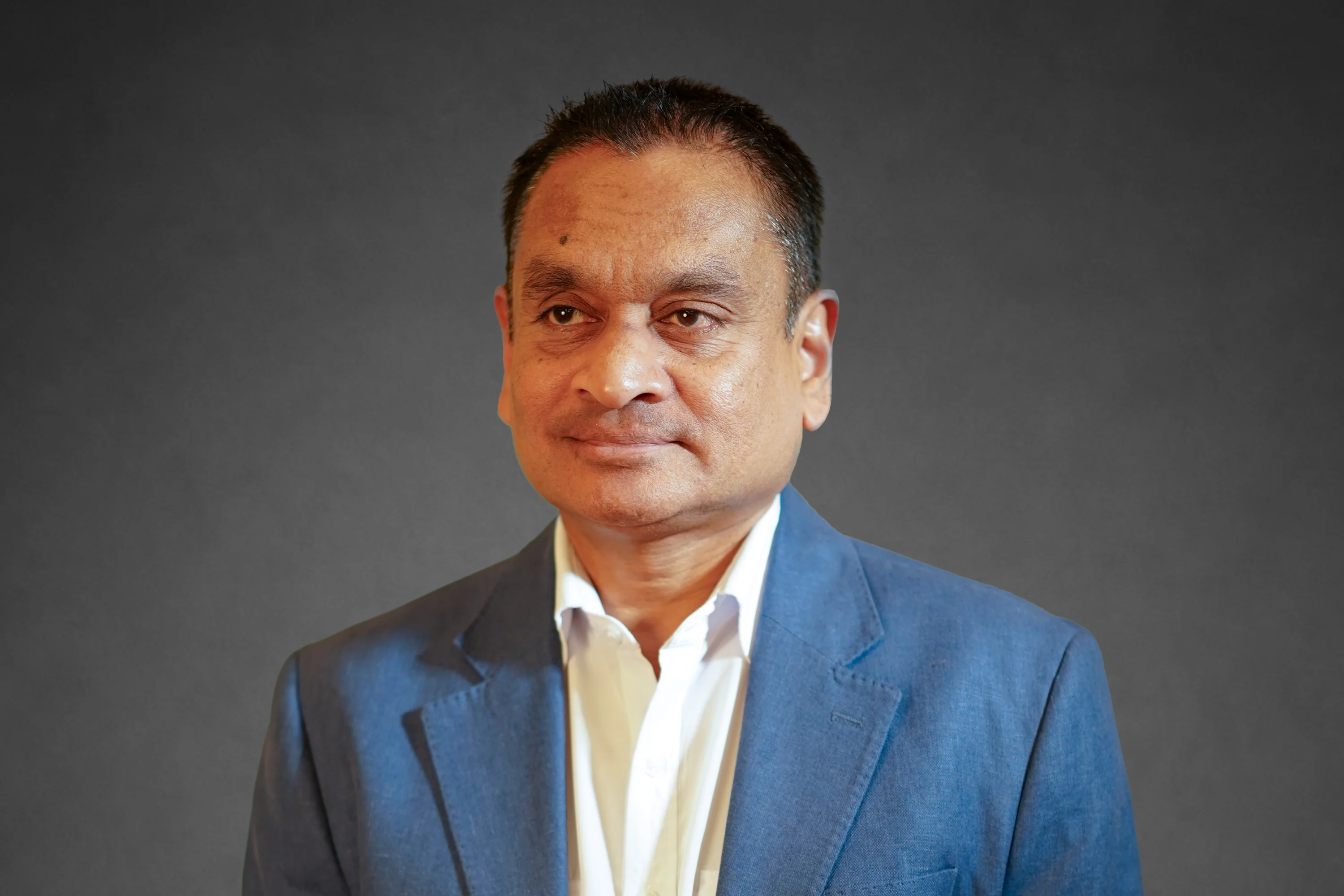
That man is Afzal Nazlie, founder and managing director of Colors & Shades, the Sri Lankan paints, coatings, and construction materials company he built from scratch in 2013. There was no single lightbulb moment; rather, it was “a farrago of common grievances”—the accumulated frustration of customers who had no real sense of what was available in global markets or how it might solve problems they had learned to live with. Afzal, who spent roughly 15 years overseas—four in academia and the rest working across Singapore and India—returned home on the premise that Sri Lanka simply hadn’t been shown what good products could do.
“Foreign expertise gets you only partway. The rest is finding the right people, earning the confidence of clients, and holding performance steady inside a business environment that will, without much warning, throw the rarest and worst events directly at you.”
An Organic Evolution
Twelve years later, Colors & Shades has grown well beyond paint. What began as a paints and coatings supplier expanded first into adjacent categories: waterproofing, surface preparation, and other construction chemicals that naturally complement coatings. From there, it grew into high-pressure laminates from Austria, access systems like gondolas, tiles, marble, mosaics, bath fittings, and sanitaryware. Afzal describes this expansion as organic rather than opportunistic—each new category was a direct response to an emerging market gap, not a speculative bet.
Today, the company supplies architects, developers, and contractors on some of Sri Lanka’s most prominent developments, including Altair, Marina Square Uptown, Onthree20, Cinnamon Red Kandy, Shangri-La Colombo, One Galle Face, Mireka Towers, and Havelock City. Operating primarily as a business-to-business (B2B) entity, its primary clients are professionals—architects, interior designers, main contractors, and specialized subcontractors—who demand exacting standards.
“Our value proposition for products and services has to be crisp, relevant, world class, and professional,” Afzal says. To match these expectations, the company’s projects team operates seven days a week, holidays included, showing up on site even on Christmas and Avurudu without exception.
“Consistency is non-negotiable in a market as unpredictable as Sri Lanka’s. We show up on Christmas. We show up on Avurudu. No exceptions.”
Strategic Reach and Brand Discipline
That B2B discipline also led to the launch of C&S Projects, an e-commerce arm designed for retail customers who desire the same quality standard on a smaller scale without navigating a developer-focused pipeline. Afzal views this as a deliberate hedge—a strategy to cover the market comprehensively, from multibillion-rupee contracts down to individual homeowners ordering online.
The foundation for this standard was laid in part at the National University of Singapore, an institution Afzal credits with instilling academic rigor, continuous improvement, and the grit to perform regardless of external conditions. Early advice from Minoru Fujii, founder of Japanese paint brand SKK, also shaped his philosophy: opportunities do not arrive often, and when they do, one must be ready to seize and sustain them. Afzal translated this into an ongoing internal benchmark: Are we better today than we were yesterday?
Selecting global brand partners involves a similarly deliberate filter. While the core criteria—a supplier’s value system, staff quality, responsiveness, and customer commitment—are straightforward, Afzal has walked away from famous global brands when they failed to maintain consistent quality or response times. Consistency, he maintains, is non-negotiable in an unpredictable market like Sri Lanka’s. The resulting portfolio features a refined shortlist: Fundermax (high-pressure laminates from Austria), SKK (paints and textures from Japan), and Mapei (construction chemicals from Italy).
Navigating Risk and Crisis
Establishing the business in Sri Lanka in 2013, rather than in Singapore or India where he also had options, was the single biggest risk Afzal took given the country’s volatile economic climate. His formula for weighing risk compares the worst potential outcome against the best; if the downside dwarfs the upside, he walks away. However, recognizing that a new business cannot survive on over-analysis alone, he relies heavily on gut instinct alongside data. Once committed to Sri Lanka, the risk calculation yielded to execution: making the decision work.
That resilience was put to the test between 2019 and 2022, when Sri Lanka faced the Easter Sunday attacks, the global pandemic, and a complete economic collapse. Customers faced insolvency, payments stalled, imports were frozen, and the rupee depreciated rapidly.
“Everybody has a plan until they get punched in the face,” Afzal notes, quoting Mike Tyson, as no contingency planning could have fully anticipated the compounded crisis. The company survived by narrowing its focus exclusively to what it could control while allowing uncontrollable factors to settle.
Bridging the Skills Gap and Looking Forward
Afzal notes that he never harbored a grand ambition to become a businessman, relying instead on a habit of showing up with a positive mindset. Rather than relying on a single landmark deal, the company’s growth resulted from several successful projects arriving in close succession, allowing its reputation to compound over time.
While international hotel brands and developers have raised product specifications and social media has elevated consumer awareness, Afzal argues that the primary market gap now lies in execution skills—specifically, the training of engineers and site application workers. To address this, Colors & Shades conducts continuous training programs in partnership with foreign principals like Fundermax, SKK, and Mapei. Additionally, sustainability has evolved from a talking point into a requirement, driven by incoming international capital and green certification mandates.
Reflecting on his journey, Afzal expresses surprise not at the scale of the business, but at the enduring truth that sustained daily effort directly drives outcomes. His advice to professionals returning from abroad to build local ventures is practical: international expertise is only a starting point. Long-term success requires securing the right talent, earning client trust, and maintaining consistent performance amidst sudden economic disruptions.
Looking ahead two decades, Afzal envisions Colors & Shades remaining rooted in its founding principles: integrity, reliability, and trustworthiness—or as the company motto states: We do it better.