
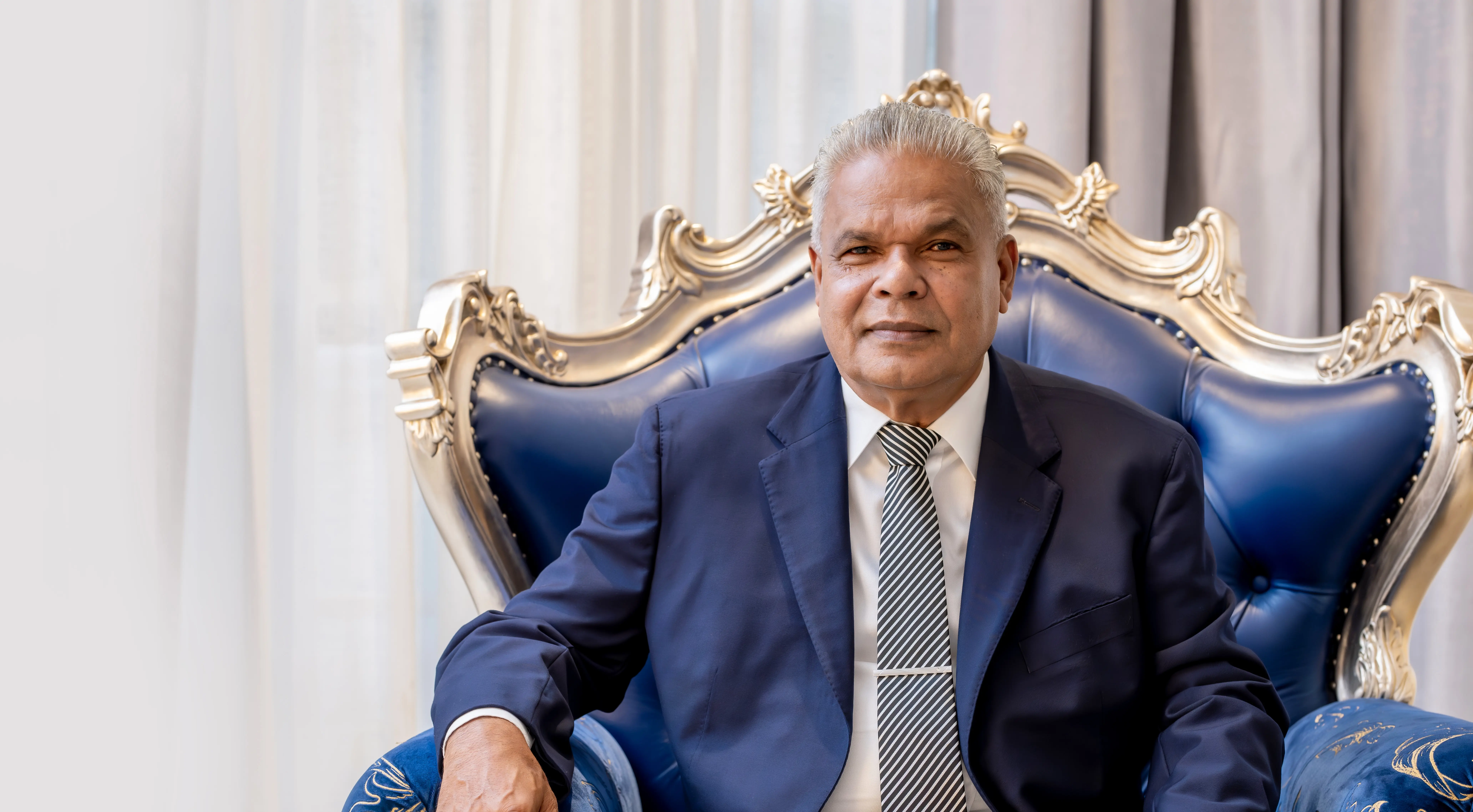
Dudley Sirisena’s entrepreneurial journey began on June 6, 1986, but the war and insurgency made it slow. In 1993, an 800,000-rupee loan from Bank of Ceylon let him start his first rice mill on a very small scale. Many opportunities passed him by because of the situation, yet he says he has grown his businesses through every political, social and economic change.
After the conflict ended in 2009, growth accelerated. By 2014, Araliya Group had grown from eight companies to twelve. Sirisena closed one, a vehicle sales company, at the end of 2014. With no clear policy or tax regime, exiting was better than taking losses. Between 2014 and 2016, he expanded in hospitality, built new rice storage and processing facilities, and increased his stake in dhal and spices.
Beginnings
Sirisena started Araliya Sahal in 1993 as a small mill. From 1994, he supplied Sathosa, mainly for the Armed Forces. When the UNP government came to power in 2002, that order went to another private company, which then bought its rice from him. He remained a small player until 2008, when the end of the war brought new infrastructure and new competitors. He decided to enter the market in earnest, and competing was a great challenge.
Araliya Sahal is now the number one rice brand in Sri Lanka. Even plantation workers, the lowest income earners, buy Araliya naadu sahal because they know it is the best quality. Taste, ease of preparation and quality are its combined strengths.
Challenges
Businessmen outside Colombo face many challenges, and overcoming them shows strength of character. Sirisena’s elder brother’s political journey has been a major obstacle, and some sections of society falsely claimed that his brother’s politics helped his business. That was not true.
His background was modest. His mother was a teacher and his father was the village head. He has eleven siblings, and his six sisters never had the chance to work. Sirisena started from the very beginning. To anyone carrying jealousy, hatred or anger, he says: clear your mind, and remember that everyone will die someday. He says he could not have come this far had he kept negative criticism in mind. At 56, he felt he had greater strength and experience than ever.
Hospitality
Sudu Araliya in Polonnaruwa has 104 rooms, and Araliya Green Hills in Nuwara Eliya has 160, the largest in the area. The group began building a 250-room property in Unawatuna, and in April 2017 it opened a 192-room property in Nuwara Eliya.
He bought Sudu Araliya in 1998 at a People’s Bank auction. The hotel had closed after the 1983 troubles, and the military took it over in 1986. Nobody wanted to invest in tourism then, so the price was very low. Sirisena built it with an NDB loan and opened it on his son’s birthday in June 1999. That November, the LTTE attacked the airport and tourism crashed. There were months when the hotel could not sell a bottle of water. He says he will never forget it.
Economy
Asked which sector holds the greatest promise, Sirisena notes that developed nations owe their success to favorable population density, ample land and natural resources, none of which Sri Lanka has. Because the island is small and densely populated, even rice barely covers domestic demand, never mind exports. His conclusion is a practical one: Sri Lanka must change course and seek alternatives to the industries it has traditionally depended on.
That same realism colors his view of youth migration. “Without a doubt, this is among the worst things happening to our economy today,” he says, adding that departures surged after the 2022 crisis. Of his roughly 10,000 employees, seven to eight hundred, many of them in top management, left to seek opportunities overseas. “The damage this economic disaster has done to the country is beyond measure.”
Still, he urges young people to move beyond the service sector and consider manufacturing, which he believes has plenty of room to grow and could help drive the country’s development.
Property
Araliya Land and Homes is the fourth business Sirisena started. While it turns a profit, larger players dominate the field and the environmental costs are real. With so many people and so little land, he believes the country should stop carving land into small plots and build affordable condominiums instead.
Success, in His Own Words
Material milestones mean little to Sirisena these days. A new car or a piece of land once brought him real joy, but that feeling has long since faded. “Seeing that my staff and my servicemen are happy is my greatest pleasure,” he says. “If they are doing well, then so am I, and that is my top priority at the moment.” Society likes to sort people into good and bad, he reflects, when most are simply shaped by the surroundings they grew up in. He hopes that others who follow his path will feel inspired to build something of their own.
When asked whether he has fulfilled his childhood dream, he pauses. Even as a boy, he understood that money was necessary for everything, and he admits that he relied on a few questionable tactics early on to get started, ones he would never recommend to anyone. The lesson he wants to remember is a different one: “Nothing is possible without a proper education. Education and self-discipline, working together, are what make a person successful.” Whether in life, career, business or politics, he says, the formula never changes.
For a man who once lived on two rupees a day, it is a formula he has clearly lived by, and one he is determined to pass on.